OpenChoreo’s 2026 Year in Review: Built Together, in the Open

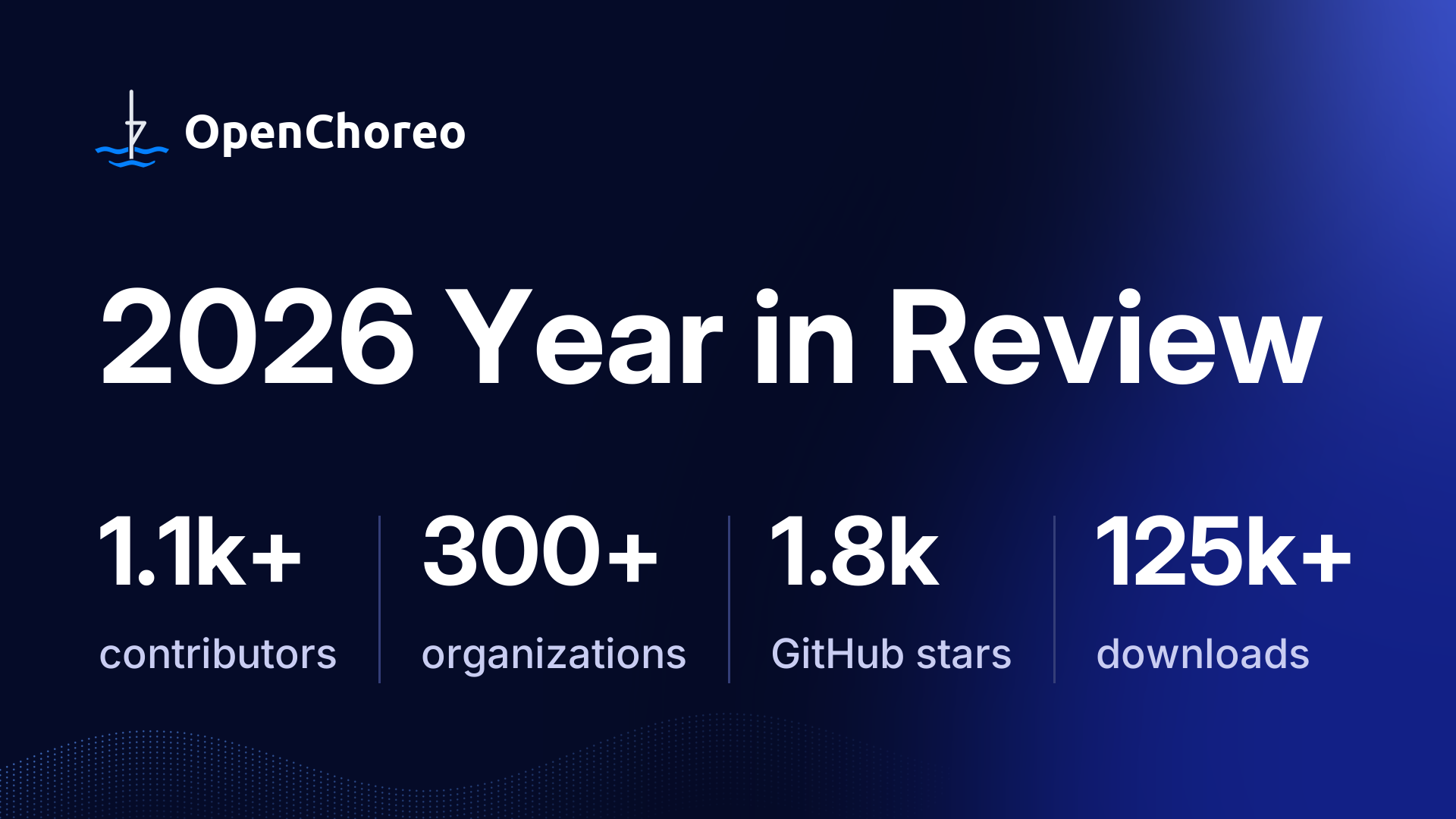
OpenChoreo joined the CNCF Sandbox on January 6, 2026, a year to the week after its first commit. In March, we shipped OpenChoreo v1.0, our first generally available release ready for production use. Looking back eight months later, we're honoured to see how the wider cloud-native and platform engineering community has come together to drive the project to heights we could only have imagined at the beginning.
In this post, we look back on 2026: what we've achieved together as an open-source community, and where we're going from here.
2026 by the numbers
In just under a year since our v1.0 release, we've seen the project reach triple-digit growth across the board, according to CNCF Project Insights and GitHub.
| Metric | Number | Change vs. previous year |
|---|---|---|
| Total contributors[1] | 1.1k | +134% |
| Total contributing organizations[1] | 334 | +129% |
| GitHub stars | 1.8k | +357% |
| GitHub forks | 276 | +283% |
| GitHub downloads[2] | 127k | +2,440% |
| LFX health score | Excellent (88) | - |
| Ecosystem modules | 61 | - |
[1] Some of these numbers may be higher now, as CNCF project insights are updated periodically. [2] Based on https://github.com/openchoreo/openchoreo/pkgs/container/controller.
A massive thank you to our community
The numbers only tell part of the story. A project that started inside WSO2 is now shaped by more than a thousand contributors, building the next generation of internal developer platforms in the open. This, without a doubt, is the growth we're proudest of. After all, platforms don't win, ecosystems do.
Whether you've reported an issue, sent a PR, opened a discussion, or even asked a question, know that you've helped shape the project into what it is today. We couldn't have done it without you.
To our contributors: every fix, feature, question and thoughtful review made the platform better for everyone who comes after you.
To our maintainers: thank you for the late nights and careful reviews, and for keeping the bar high while keeping the door open.
To our adopters: thank you for trusting our platform in production, for sharing your stories as inspiration to others evaluating the platform, and most of all, for telling us honestly what worked and what didn't. Your feedback shaped our roadmap more than any plan we wrote ourselves.
If you're trialing OpenChoreo or already running it in production, please consider adding your organization to our ADOPTERS list. It's a small step that makes a big difference to the project's future within the CNCF ecosystem.
Where we're heading
Our next minor release, v1.4, is already in the works and we expect to ship it by the end of the year. It focuses on two main themes:
-
Making AI a first-class actor in the platform, with AgentTypes, Agents, and recognition of MCP and A2A endpoints, alongside better integrations with agentic runtimes on Kubernetes.
-
Making brownfield adoption easier, so that teams with an existing Kubernetes estate can progressively onboard to their new IDP from where they are today.
There's a lot more planned for v1.4, and we encourage you to take a look at our public roadmap on GitHub.
We also welcome new ideas and proposals through GitHub discussions, issues or the #openchoreo channel on CNCF Slack.
Meet us at KubeCon NA 2026
If you're joining KubeCon + CloudNativeCon North America in Salt Lake City this November, come say hi and meet some of our maintainers. You can find all the details in this post.
Here's to 2027
Thank you for making 2026 a year to remember!
If you're new here, here's how to get started:
- Try the hosted read-only demo
- Try the online sandbox
- Run OpenChoreo locally with Docker or a k3d cluster
- Pick up a good first issue
- Explore the project on GitHub and give it a star
We're excited to see what we build together in 2027. See you in the community!