Custom Roles and Bindings
This guide walks through creating custom roles and role bindings to control access in your OpenChoreo installation using the Access Control UI in Backstage.
Access Control UI
Navigate to Access Control in the Backstage left sidebar. The page has three tabs:
- Roles — manage cluster and namespace-scoped roles
- Role Bindings — manage bindings that connect subjects to roles
- Actions — browse all available actions in the system
Each of the Roles and Role Bindings tabs has two sub-tabs: Cluster and Namespace, for managing resources at the appropriate scope.
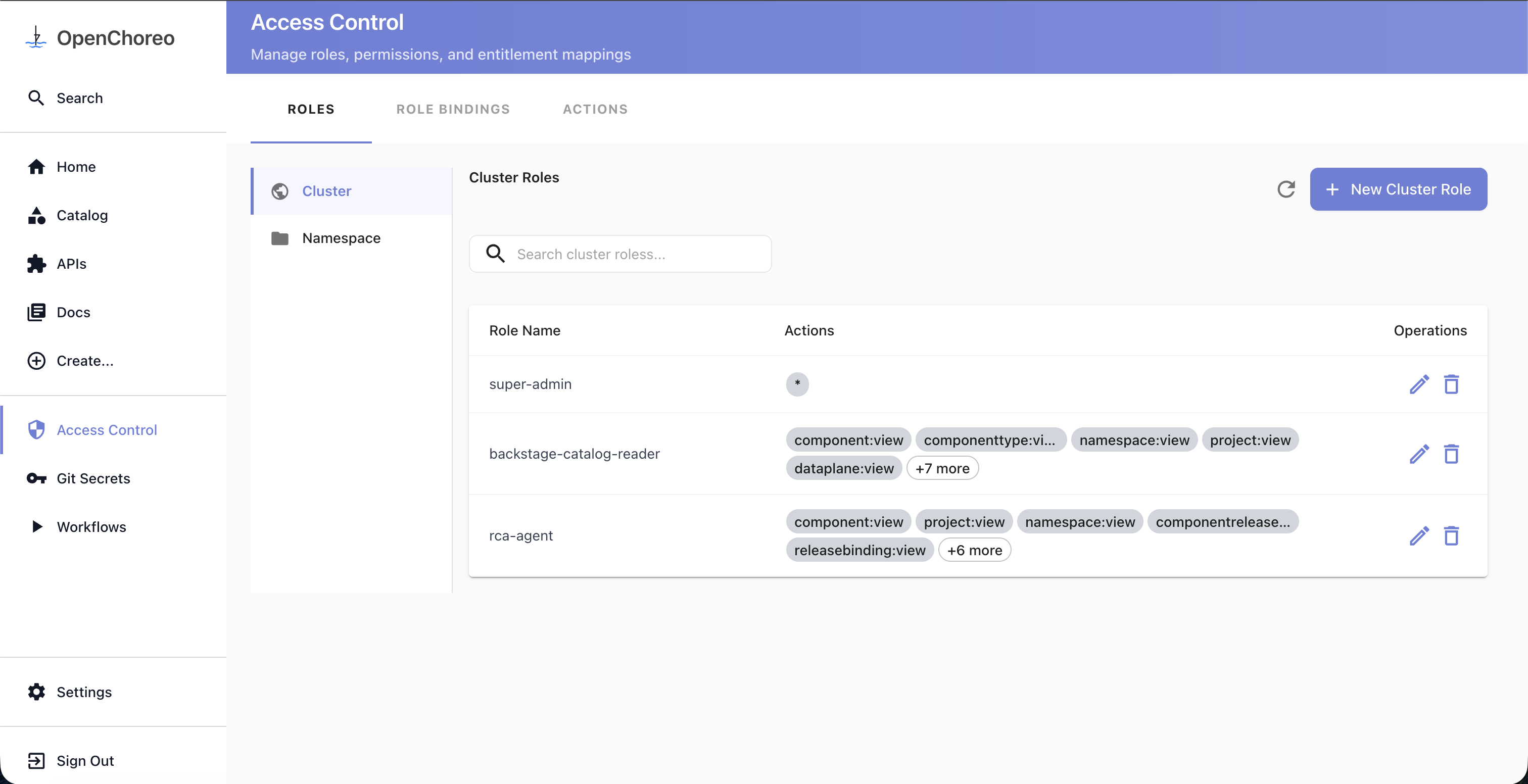
Creating a Role
- Go to Access Control → Roles
- Select the Cluster or Namespace sub-tab depending on the scope you need
- For namespace roles, select the target namespace from the dropdown first
- Click New Cluster Role or New Namespace Role
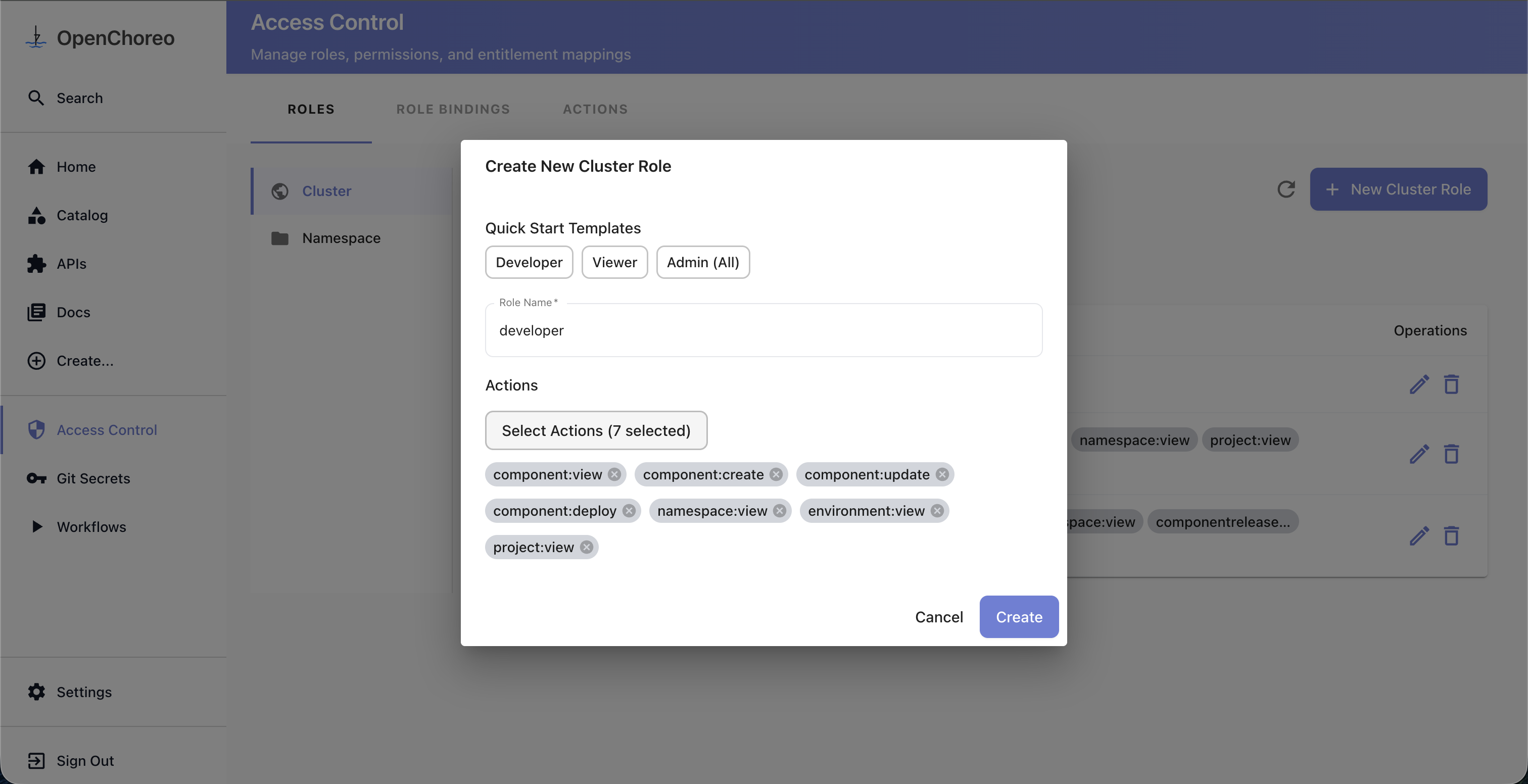
- In the dialog:
- Optionally select a quick start template (Developer, Viewer, or Admin) to pre-fill actions
- Enter a Role Name
- Click Select Actions to open the action picker — actions are grouped by resource type, and you can select individual actions, all actions for a resource type (e.g.,
component:*), or all actions (*)
- Click Create
Creating a Role Binding
Role bindings connect a subject to a role. The UI uses a step-by-step wizard to guide you through the process.
- Go to Access Control → Role Bindings
- Select the Cluster or Namespace sub-tab
- For namespace bindings, select the target namespace from the dropdown first
- Click New Cluster Role Binding or New Namespace Role Binding
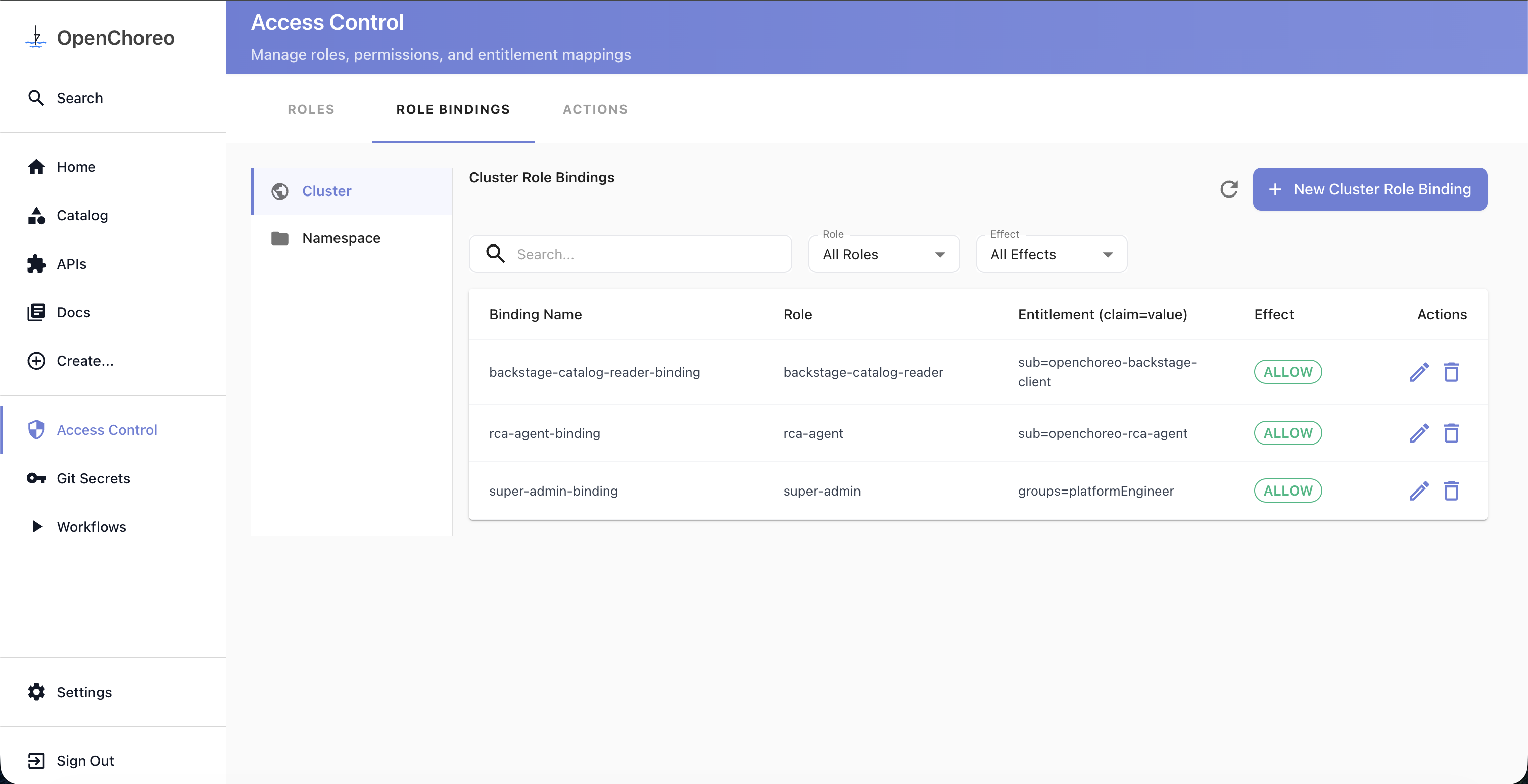
The wizard walks through the following steps:
Step 1: Select Role
Choose the role you want to assign. For namespace bindings, both cluster roles and namespace roles are available — cluster roles are listed separately from namespace roles.
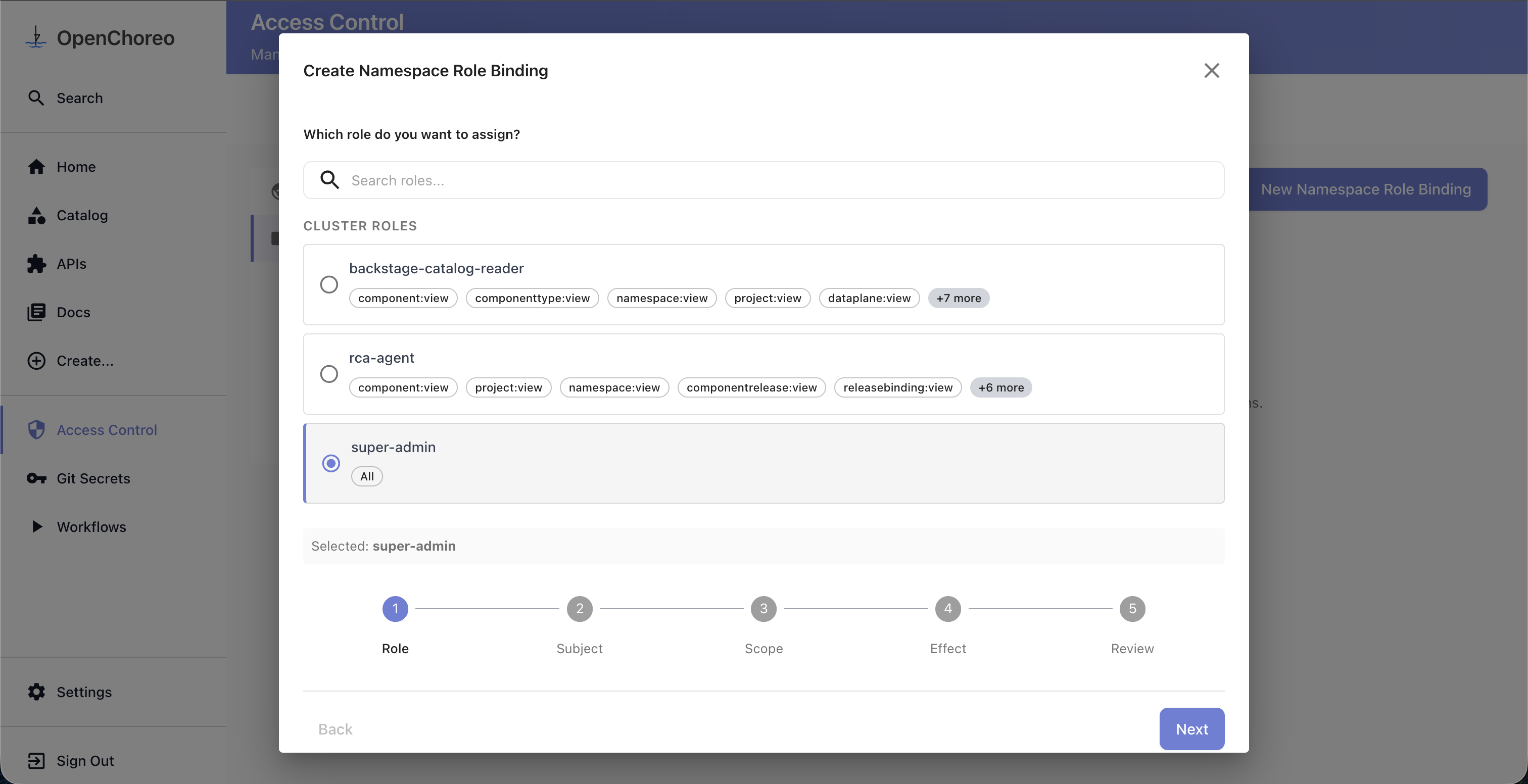
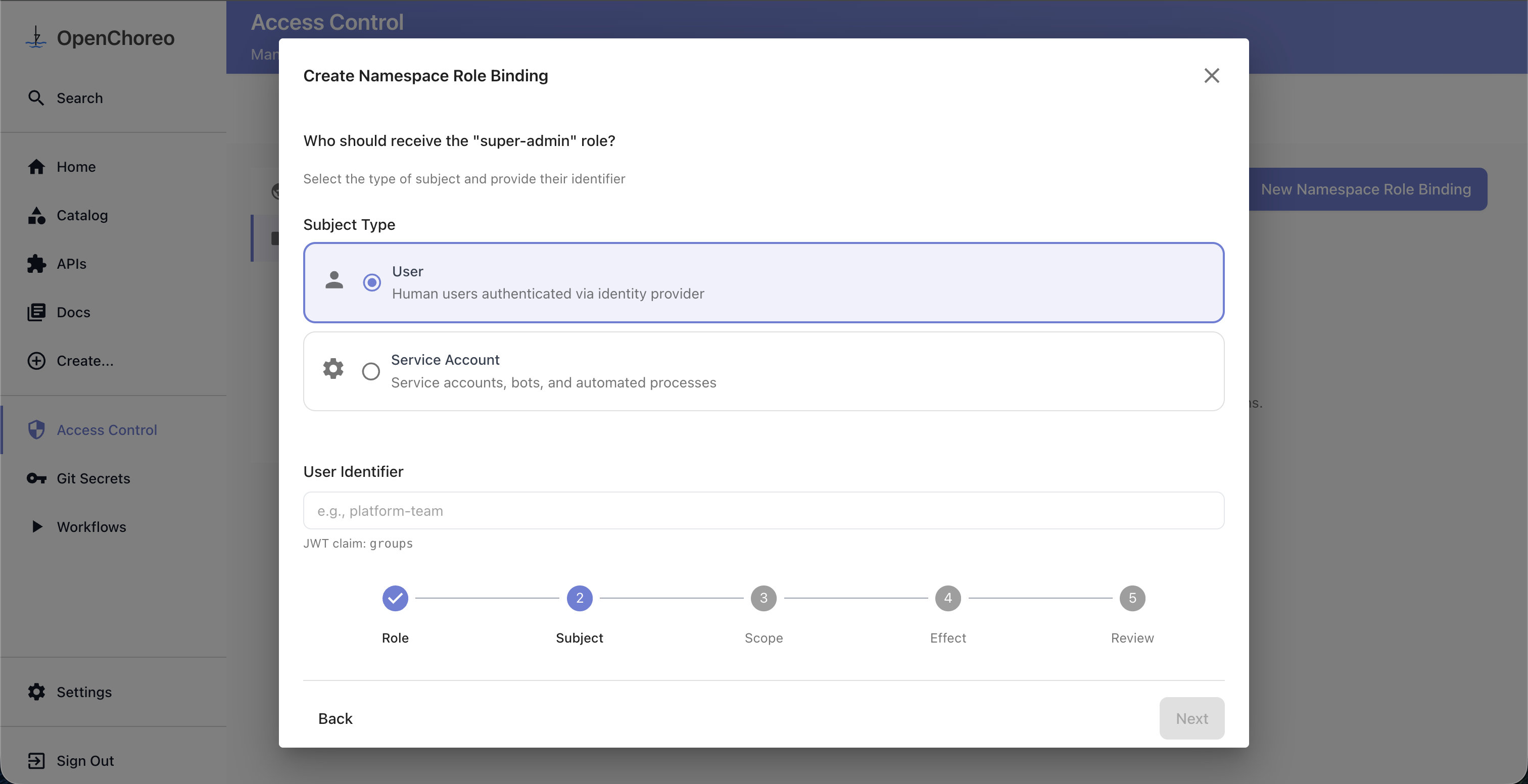
Step 2: Select Subject
Choose the subject type and provide an identifier. The available subject types and their JWT claim mappings are configured via the security.userTypes section in the Helm values. For example, if your installation defines a "User" type mapped to the groups claim, you would enter a group name like platform-team as the identifier.
The subject types shown in the wizard are dynamic and reflect what is configured in your installation. You can customize the available types, display names, and claim mappings through the Helm values.
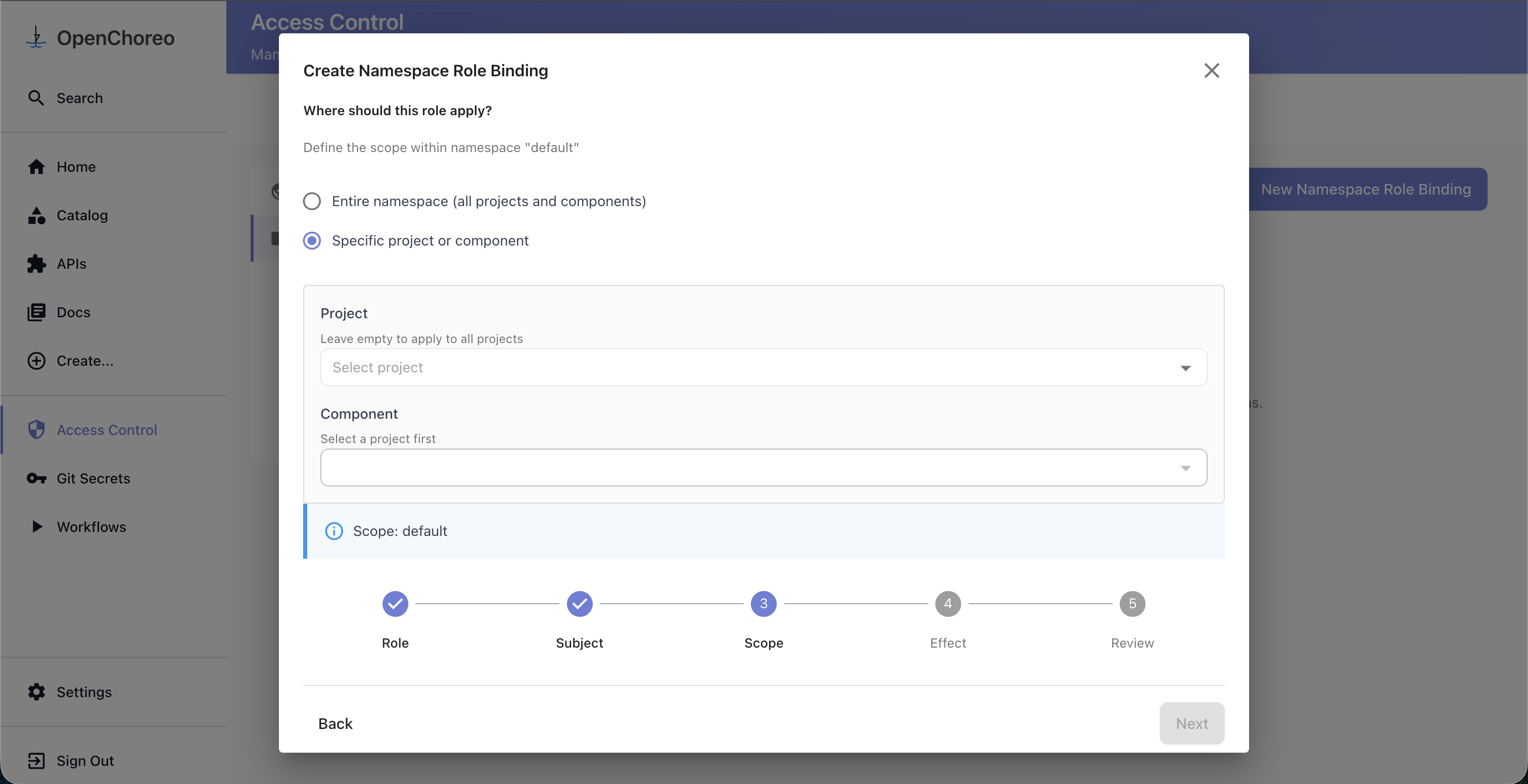
Step 3: Select Scope (namespace bindings only)
Choose where the binding applies:
- Global — the binding applies to the entire namespace (all projects and components)
- Specific — narrow down to a specific project, or further to a specific component within a project
This step is skipped for cluster bindings, which always apply cluster-wide.
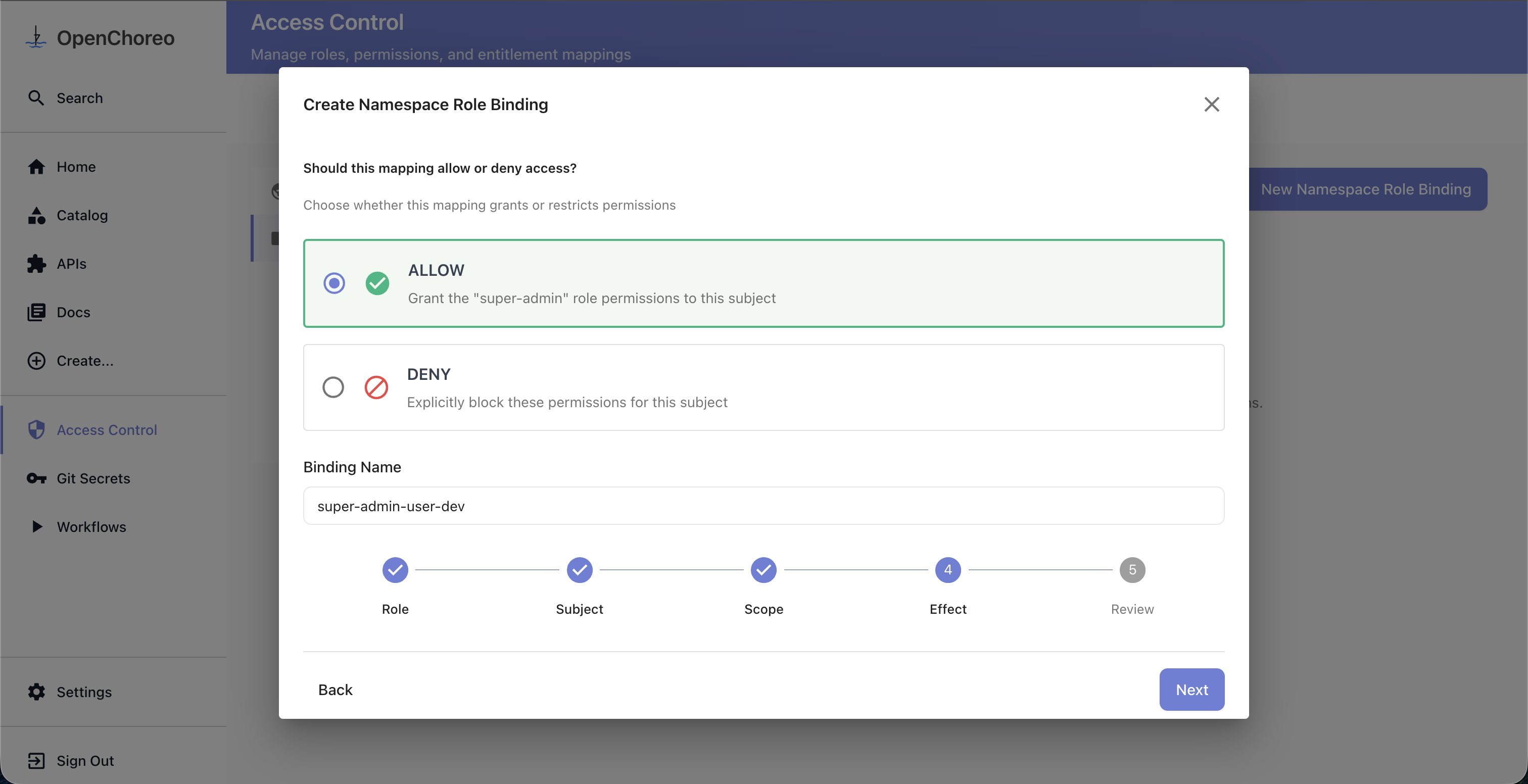
Step 4: Choose Effect and Name
Select the effect:
- Allow — grant the role's permissions to the subject
- Deny — explicitly block the role's permissions for the subject
A binding name is auto-suggested based on your selections. You can customize it if needed.
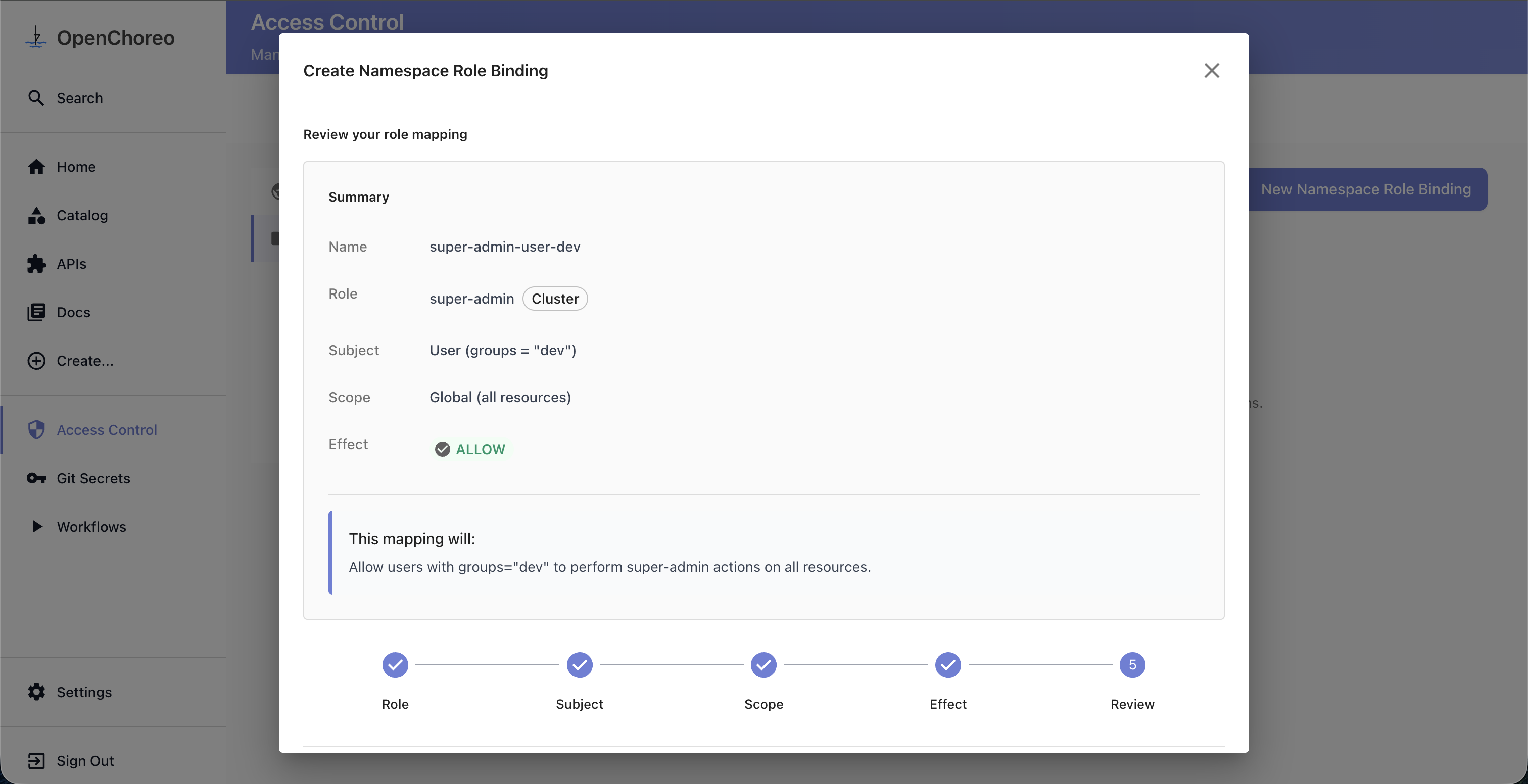
Step 5: Review
Review all your selections before creating the binding. The wizard shows a human-readable summary of what the binding will do.
Editing and Deleting
Editing
Click the edit (pencil) icon on any role or binding row to open the edit dialog. The name field cannot be changed after creation.
Deleting a Role
Click the delete (trash) icon on a role row. If the role has active bindings, you'll see a warning listing the affected bindings and can choose to Force Delete, which removes both the role and all its bindings.
Deleting a Role Binding
Click the delete icon on a binding row and confirm.
Browsing Actions
The Actions tab provides a read-only view of all available actions in the system, grouped by resource type. Use the search field to filter actions by name. This is useful when deciding which actions to include in a role.
See Also
- Authorization Overview — Core concepts and how authorization works
- Authorization CRDs — Detailed field reference for all four CRDs